
Can You Walk a Marathon? Everything You Need to Know
The short answer is yes. You can absolutely walk a marathon.
In fact, walking a marathon is more common than most people think and for many participants, it's the smarter, more sustainable choice. Whether you're new to distance challenges, recovering from injury, or simply don't consider yourself a runner, there is nothing stopping you from completing 26.2 miles on foot.
Here's everything you need to know.
What counts as walking a marathon?
A marathon is 26.2 miles. That's the distance and how you cover it is entirely up to you.
Traditional road marathons have time limits that can make walking the full distance difficult. Most large city events close their courses after six to eight hours, which puts pressure on participants who aren't running.
But a flexible marathon challenge removes that barrier entirely. The M4MH flexible marathon challenge 2026 gives you the whole of October, 31 days, to complete your 26.2 miles however you like. Walk it. Hike it. Split it into daily chunks. Combine walks with occasional jogs. The only rule is that you cross the finish line on your own terms.
How long does it take to walk a marathon?
At a comfortable walking pace of around 3–3.5mph, a continuous 26.2-mile walk takes roughly seven to nine hours. That's a long time to be on your feet in one go and honestly, you don't need to do it that way.
Here's how 26.2 miles breaks down into more manageable chunks:
Daily 30-minute walks over 31 days = approximately 30–40 miles (more than enough)
3 x 9-mile walks across three weekends = done in three outings
A mix of lunchtime walks and weekend hikes = flexible, realistic, and sustainable
The M4MH flexible marathon challenge is built around the reality that most people have jobs, families, and commitments. You don't need to block out a full day. You just need to keep moving.
Is walking a marathon good for you?
Yes and the benefits go well beyond the physical.
Physically, walking 26.2 miles over the course of a month improves cardiovascular health, supports joint mobility, boosts energy levels, and builds endurance without the injury risk that running can carry. It's genuinely one of the most accessible forms of exercise there is.
Mentally, the benefits are just as significant. Research consistently links regular walking with reduced symptoms of anxiety and depression, improved sleep quality, and a greater sense of wellbeing. There's something about putting one foot in front of the other, especially outdoors, that quiets the noise.
That connection between movement and mental health is exactly why Marathon for Mental Health exists. We started in the seafaring community, where long hours at sea and isolation from home take a serious toll on mental wellbeing. We've since expanded to include hospitality workers, remote workers, shift workers, and anyone whose working environment makes prioritising health feel impossible.
Walking a marathon is not a lesser version of running one. It's a different choice,and for many people, it's the right one.
Do I need to train to walk a marathon?
Not in the traditional sense. You don't need a 16-week training plan or a running coach. But a little preparation does go a long way:
Build your base gradually. If you're not used to walking long distances, start adding a 20–30 minute walk to your day two or three times a week in the weeks before October. Your feet, hips, and ankles will thank you.
Wear the right shoes. This is non-negotiable. Properly fitted walking or trail shoes with good cushioning will make the difference between enjoying the challenge and suffering through it. Get fitted at a specialist running or outdoors shop if you can.
Think about terrain. Pavement, trails, treadmills, decks, hotel corridors, wherever you are in the world, you can log your miles. Mix it up to keep things interesting and reduce repetitive strain.
Stay hydrated. Walking is easier on the body than running, but you're still covering serious distance over a month. Drink water consistently, especially on longer outings.
Invest in good socks. Seriously. Blister-proof, moisture-wicking socks are worth every penny.
Can I mix walking and running?
Absolutely. Many of our M4 participants do exactly this a run/walk combination is a great way to build fitness progressively while still completing your 26.2 miles comfortably.
Start with a walk. Add a short jog when you feel like it. Walk again. There are no rules beyond covering the distance.
What if I've never done anything like this before?
Then this flexible marathon challenge 2026 is exactly where to start.
M4 was built for people who feel excluded by traditional marathon culture, the pressure to run fast, to look a certain way, to have been training for months before you're allowed to take part. None of that exists here.
You sign up, you set up a fundraising page for a mental health charity that matters to you, and you walk your miles at your pace, in your own time, wherever you happen to be in the world. You'll get access to our Strava community, regular check-ins, and a group of people all doing the same thing alongside you.
In 2025, 260 participants across four continents completed the M4 challenge. Some ran every mile. Some walked every mile. Most did a mix of both.
All of them crossed the finish line.
Ready to walk your marathon?
The M4 flexible marathon challenge 2026 takes place throughout October. Sign up now and join a global community completing 26.2 miles for mental health.
Your way, at your pace, on your terms.
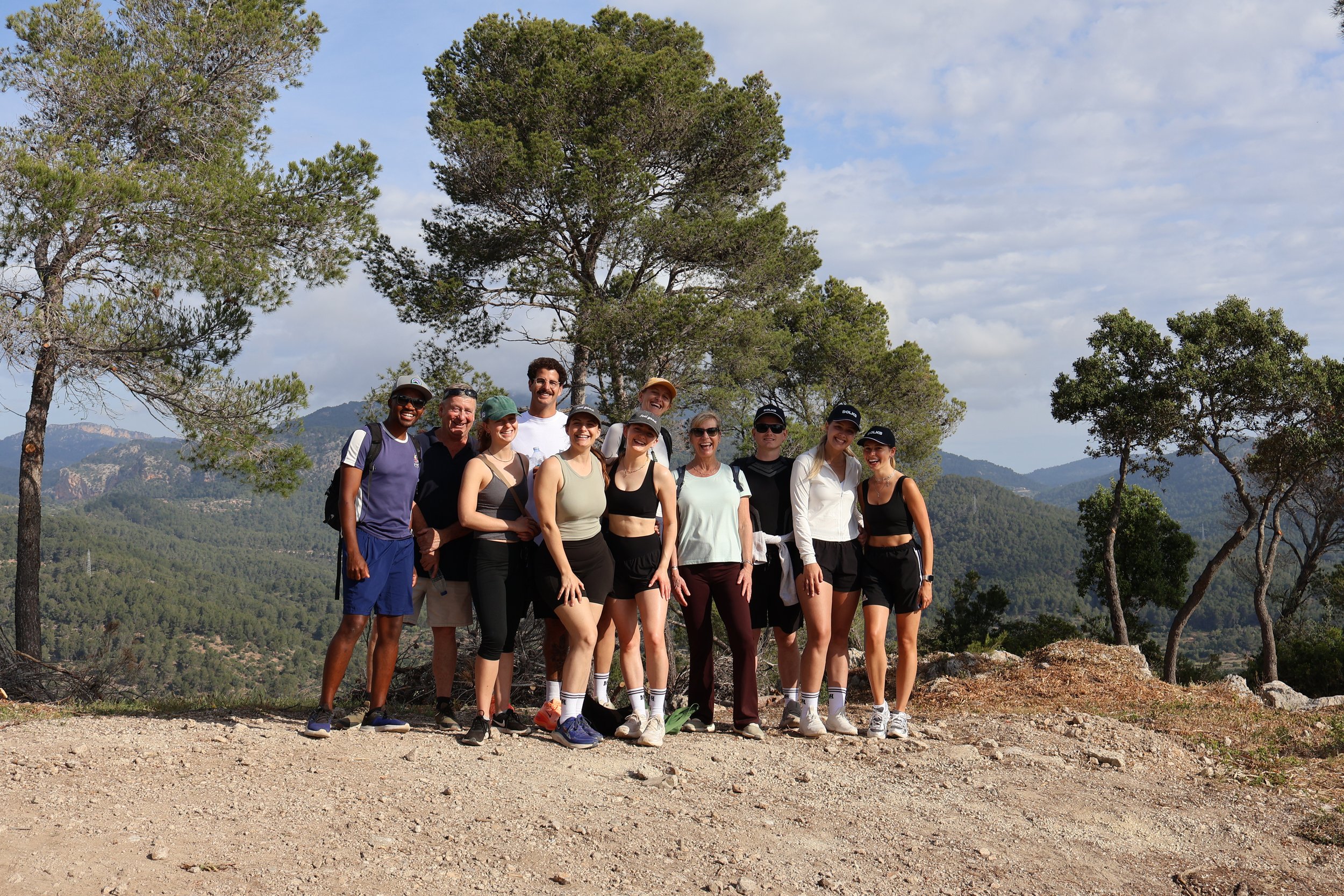
A group of hikers on our Community 5k hike in Palma, Mallorca.
Marathon for Mental Health is a global flexible marathon challenge raising money for mental health charities worldwide. Run, walk or hike 26.2 miles your way throughout October 2026.